News from October 2026
665 stories of semiconductor news published on the Hub in October 2026, newest first and grouped by day (UTC). Each headline opens the story's page on the Hub, with a summary and a link to the original report.
Showing 651 to 665 of 665 stories.
Wednesday 21 October 202641 stories
Tenstorrent raises $1.5 billion in a Series E roundDesign & IP · Electronics Weekly · Summary
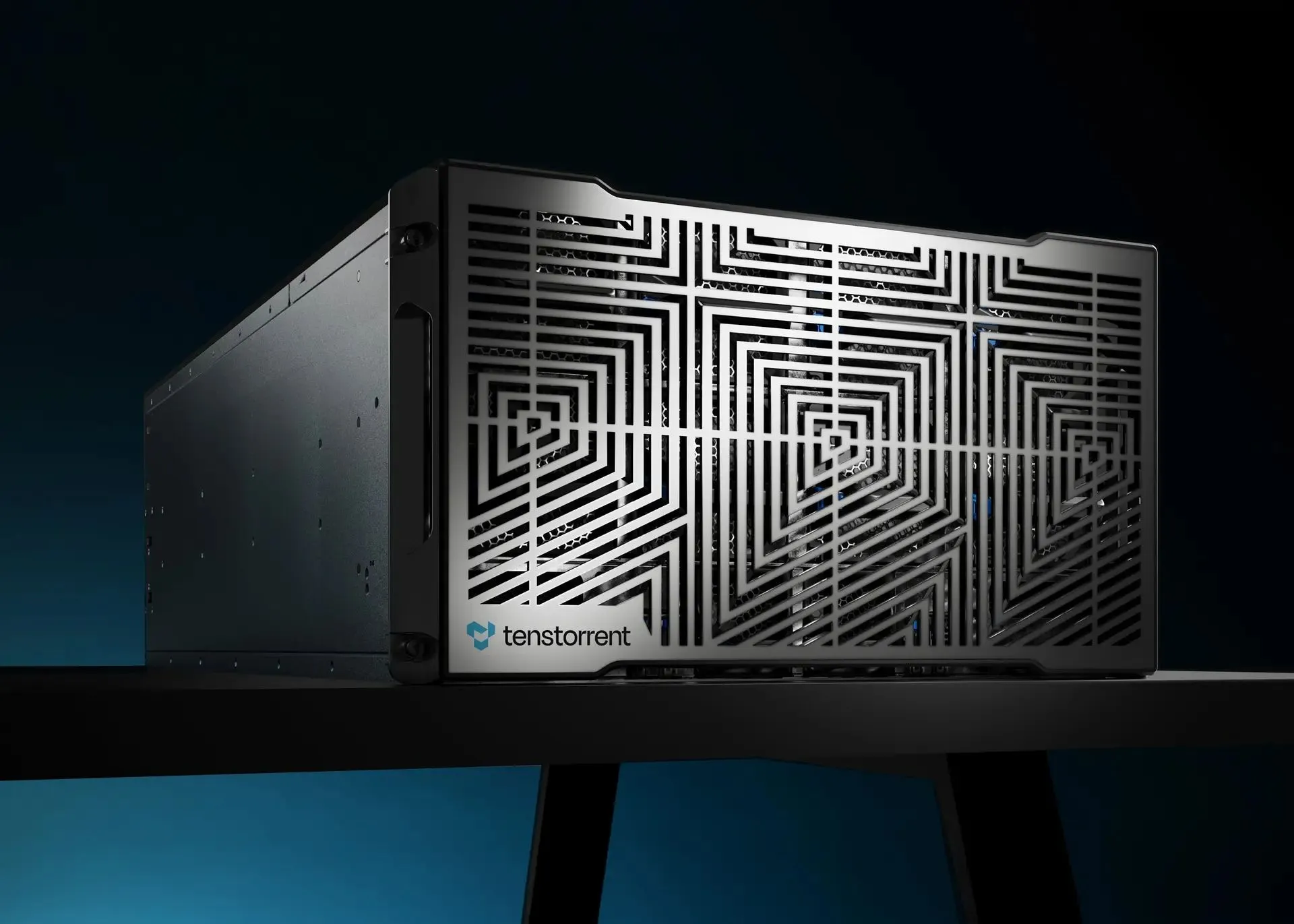
Image: Electronics Weekly (opens in a new tab) Tenstorrent, the AI chip and computer company led by Jim Keller, has raised US$1.5 billion in a Series E round that values it at US$6.2 billion after the investment.
Trace Capital and Innovation X led the round, joined by new and existing investors including Fidelity, Morgan Stanley, ARK Invest, Sandisk, T. Rowe Price, Tether Investments and XTX Markets.
The company plans to use the money to deploy its Galaxy servers at larger scale, to support open weight models for language and video generation, and to expand the AI and CPU intellectual property it licenses to customers who design their own chips.
Tenstorrent sells the same architecture across a wide range of sizes, from single accelerator cards and workstations to full racks, large clusters and licensable IP, and pairs it with an open source software stack so developers can run models locally and enterprises can deploy them on their own premises.
Keller summed up the approach as one architecture sold at every size.
SEMI expects 300mm fab equipment spending to reach $227 billion in 2029Equipment & Materials · Evertiq · Summary
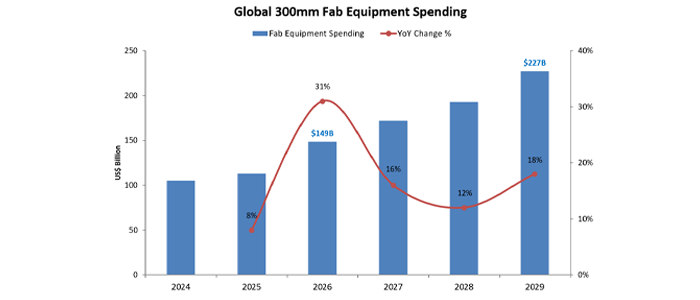
Image: Evertiq (opens in a new tab) SEMI's latest 300mm Fab Outlook expects global spending on 300mm front end fab equipment to rise 31 per cent to US$149 billion in 2026 and to grow by double digits every year to reach US$227 billion in 2029.
Construction spending on 300mm facilities is forecast at US$47.5 billion in 2026, up 23 per cent, then US$63.3 billion in 2027 and US$68.4 billion in 2028, covering leading edge logic, memory and other 300mm technologies.
Excluding pure research sites, the report counts 20 new fabs or production lines starting construction worldwide in 2026 and 18 in 2027, with three and four of those in the United States.
Equipment investment in the Americas is projected to more than double from US$18.1 billion in 2026 to US$40.6 billion in 2029, and the number of fabs or lines there starting operation or shipping first silicon rises from 13 to 23 between 2026 and 2027.
SEMI chief executive Ajit Manocha linked the expansion to AI and high performance computing.
Wolfspeed gets conditional offer of up to $1.5 billion from the US Office of Strategic CapitalMarkets & Policy · Evertiq · Summary

Image: Evertiq (opens in a new tab) Wolfspeed has received a conditional offer of up to US$1.5 billion in senior secured, delayed draw financing from the Office of Strategic Capital at the US Department of War, with a term of 30 years. The money would support domestic silicon carbide materials and wide bandgap power devices with a national security focus.
The plans also include upgrading gallium nitride epitaxy for communications infrastructure and electronic warfare, bringing gallium nitride power device production to the United States, advancing gallium nitride on silicon carbide wafers for RF uses and developing radiation hardened versions of the company's products.
If final agreements are signed, Wolfspeed would issue warrants allowing the department to buy up to 7.5 per cent of its fully diluted equity. Chief executive Robert Feurle described silicon carbide and gallium nitride as vital to national security.
Wolfspeed, which makes products in North Carolina, New York and Arkansas, came out of a Chapter 11 restructuring in 2025 that cut its debt substantially.
Lam Research consolidates California logistics in a Livermore hubEquipment & Materials · Evertiq · Summary
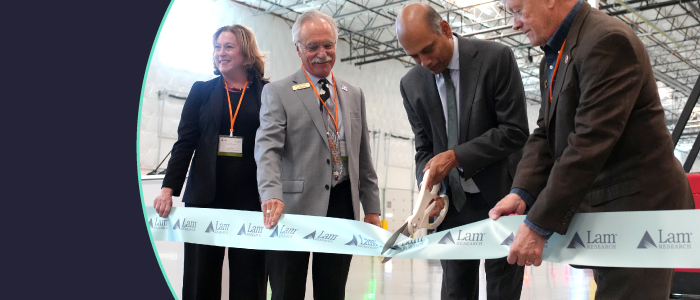
Image: Evertiq (opens in a new tab) Lam Research has opened a logistics hub in Livermore, California, bringing several separate California sites into one building of more than 43,700 square metres, which the company says is its largest warehouse in the United States.
The hub was inaugurated on 28 September and serves Lam's high volume manufacturing plant in Livermore as well as product development at its labs in nearby Fremont.
An automated storage and retrieval system of about 3,700 square metres uses 15 robots and around 150,000 bins, can hold more than 500,000 distinct part numbers and cuts the time to retrieve a part from about six minutes to under 30 seconds. A metrology lab next door supports outgoing deliveries and regional research.
Lam expects the site to support more than 200 jobs by 2027. Company executives said the consolidation lets Lam respond faster when customers change build plans or ramp new technologies, and removes the cost of moving people and materials between buildings.
GlobalFoundries tops out its Dresden expansion and unveils FDX FusionFoundry & Manufacturing · Evertiq · Summary
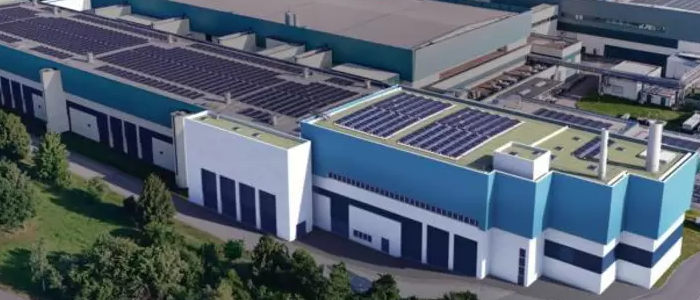
Image: Evertiq (opens in a new tab) GlobalFoundries marked the topping out of its SPRINT expansion in Dresden on 9 October.
The project is part of a €1.1 billion investment that should lift the site from up to 950,000 300mm wafers a year, depending on product mix, to more than one million by the end of 2028, which the company says will make Dresden the largest foundry site in Europe.
The extra capacity is aimed at specialised technologies for automotive, aerospace, industrial IoT and defence, and at flows kept entirely within Europe for customers with strict security needs.
Construction has run on schedule and on budget while the existing fab stays in full production, with support from the EU, the German government and Saxony under the European Chips Act.
The company also announced FDX Fusion, a next generation fully depleted silicon on insulator platform that targets digital performance similar to 7nm alongside analogue, RF and embedded memory, which it plans to develop through a future European research programme.
Infineon moves its Wolfspeed silicon carbide supply to 200mm wafersEquipment & Materials · Evertiq · Summary

Image: Evertiq (opens in a new tab) Infineon has signed a multi year agreement with Wolfspeed for 200mm silicon carbide wafers, moving an existing supply relationship from 150mm to 200mm substrates. The deal supports Infineon's own transition to 200mm silicon carbide production across its manufacturing network, including its 200mm fab in Kulim, Malaysia.
A larger wafer offers more usable area per substrate, which lowers substrate cost per device and improves fab efficiency. Infineon buys silicon carbide substrates from several suppliers to keep supply flexible, and the two companies have worked together for about 20 years.
The main demand comes from electric vehicle drivetrains, solar inverters and industrial motor drives, with power conversion for AI data centres emerging as a further market where silicon reaches its practical limits.
Infineon's chief operations officer, Alexander Gorski, said a resilient 200mm supply is essential to the long term commitments customers expect. Neither company has disclosed the value or volume of the agreement.
Micron closes fiscal 2026 with record quarterly revenue of $54.2 billionMarkets & Policy · Micron Technology (Form 8-K filed with the US SEC) · Summary
Micron Technology reported revenue of US$54.23 billion for the fourth quarter of its 2026 fiscal year, compared with US$41.46 billion in the previous quarter and US$11.32 billion a year earlier. GAAP net income was US$37.70 billion, or US$32.87 per diluted share.
Revenue for the full fiscal year reached US$133.19 billion, against US$37.38 billion in fiscal 2025. For the first quarter of fiscal 2027 the company guided revenue of US$61.5 billion, plus or minus US$1.5 billion.
Chairman and chief executive Sanjay Mehrotra said he expects fiscal 2027 to be stronger still, that Micron is raising its investment in technology, products and manufacturing, and that its long term agreements with strategic customers support the durability of its results.
Trade press coverage points to data centre memory, including high bandwidth memory for AI servers, as the main source of growth, although the release does not report HBM revenue as a separate line.
TSMC September revenue up 54.6% on a year earlierFoundry & Manufacturing · TSMC · Summary
TSMC reported consolidated revenue of about NT$511.86 billion for September 2026. That is 0.6 per cent below August, when the company booked NT$514.81 billion, but 54.6 per cent higher than September 2025.
Revenue for the first nine months of the year came to roughly NT$3.90 trillion, an increase of 41.1 per cent on the same period of 2025. Taken together, July, August and September added up to the record quarter TSMC confirmed a week later, and the total already sat above the top of the guidance range the company had given in July.
The monthly report is a single figure: it does not break revenue down by customer, application or process node, so it says nothing directly about the share coming from AI accelerators. Those details arrive with the quarterly results, which TSMC published on 15 October.
Monthly revenue is one of the earliest public signals of foundry demand, which is why analysts across the supply chain watch it closely.
TSMC posts record third quarter as 2nm enters the revenue mixFoundry & Manufacturing · TSMC · Summary
TSMC reported third quarter 2026 revenue of NT$1,494.24 billion, about US$46.72 billion, which is 50.9 per cent higher than a year earlier in local currency and 17.6 per cent above the second quarter. Net income reached NT$763.06 billion and diluted earnings per share were NT$29.43, both up 68.7 per cent year on year.
Gross margin was 66.4 per cent and operating margin 58.7 per cent. The node split shows how quickly the leading edge is moving: 2nm accounted for 8 per cent of wafer revenue in its first reported quarter, 3nm for 33 per cent, 5nm for 28 per cent and 7nm for 10 per cent, so 7nm and below made up 79 per cent of the total.
For the fourth quarter the company guided revenue of US$52.3 billion to US$54.3 billion, with gross margin of 65 to 67 per cent, on an assumed rate of 31.8 New Taiwan dollars to the US dollar. The quarter came in above the range TSMC gave in July.
Infineon and ZuriQ widen their work on two dimensional trapped ion chipsDesign & IP · Evertiq · Summary
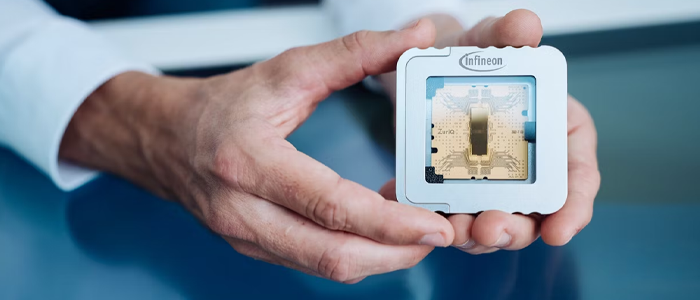
Image: Evertiq (opens in a new tab) Infineon and ZuriQ, a Swiss quantum computing start up spun out of ETH Zurich in 2024, are expanding their collaboration to scale ZuriQ's trapped ion design to more qubits. ZuriQ is responsible for chip design, while Infineon contributes semiconductor fabrication, advanced packaging and integrated photonics.
In earlier joint work the partners held nine individually controllable ions in a three by three grid, which Infineon describes as the largest two dimensional array of its kind reported so far. Most trapped ion systems line ions up in a single row.
ZuriQ's approach is two dimensional from the outset and uses a Penning micro trap, moving ions across the chip with electric and magnetic fields, which the companies say avoids complicated junction structures and makes larger arrays simpler to build.
ZuriQ's co founder and chief executive, Pavel Hrmo, said the partnership is turning technical progress into hardware that can be manufactured at scale. No qubit target, timeline or financial terms were disclosed.
Siemens brings Nvidia GPU acceleration to Calibre lithography simulationEDA & Tools · eeNews Europe · Summary

Image: eeNews Europe (opens in a new tab) Siemens is integrating its Calibre manufacturing software with Nvidia's cuLitho library, which runs computational lithography on GPUs.
The companies say full chip optical proximity correction, the step that adjusts mask shapes so printed features come out as designed, runs up to 12 times faster, and Siemens reports verified speed ups of between 10 and 17 times across the main lithography simulation workloads.
The work also covers curvilinear inverse lithography technology, which uses freeform mask shapes and becomes more practical for High NA EUV when run times fall.
Faster simulation lets chipmakers and mask shops run more optimisation passes, find manufacturing problems earlier and improve mask accuracy before tape out, which matters most for large AI accelerators and advanced memory where masks are expensive and process windows are narrow.
The announcement does not give an availability date, licensing model or customer names, so it is not yet clear when production users will be able to run the accelerated flow.
Samsung guides to about 107 trillion won operating profit for the third quarterMarkets & Policy · Samsung Electronics · Summary
Samsung Electronics issued preliminary guidance for the third quarter of 2026 showing consolidated sales of about 195 trillion Korean won and operating profit of about 107.4 trillion won.
Because Korean disclosure rules call for a single estimate, those figures are midpoints of ranges of 194 to 196 trillion won for sales and 107.3 to 107.5 trillion won for operating profit. In the second quarter the company reported sales of 171.5 trillion won and operating profit of 89.49 trillion won, so the step up is large.
Korean press coverage attributes most of the gain to memory, including HBM4 supplied for Nvidia's Vera Rubin platform, and notes that Samsung is the first Korean company to report quarterly operating profit above 100 trillion won.
The guidance does not split results by division; those details are due with the final results, which Samsung has scheduled for 29 October. Guidance of this kind is unaudited and can change when the full accounts are published.
STMicroelectronics proposes one more year for Jean-Marc Chery as chief executiveMarkets & Policy · Evertiq · Summary
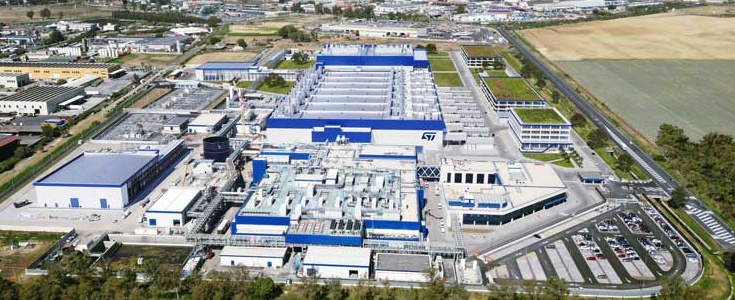
Image: Evertiq (opens in a new tab) The Supervisory Board of STMicroelectronics will recommend that Jean-Marc Chery be reappointed as President and Chief Executive Officer for a further term of one year, and Chery has agreed to serve. Shareholders will vote on the proposal at the company's 2027 Annual General Meeting.
If they approve it, he will also remain Chairman of the Managing Board. The board presented the recommendation as a way to keep the company's strategy, operational discipline and recent momentum steady over the coming year.
Chery has led the company since May 2018. Before becoming chief executive he held the roles of chief technology officer and chief operating officer, and from July 2017 he was deputy chief executive.
The announcement was made through a company press release reported by Evertiq. It did not set out further changes to the management team, and the full agenda for the 2027 meeting will be published by the company ahead of the vote in the usual way.
Saturday 3 October 20262 stories
Tracing Hardware Design From Physical Devices to RTL (Infineon, TU Munich)Markets & Policy · Semiconductor Engineering · Summary

Image: Semiconductor Engineering (opens in a new tab) Researchers at Infineon Technologies and Technical University of Munich published a technical paper titled “From Physical Devices to RTL Models: Abstraction and Validation in Hardware Engineering.”
Abstract: “This paper introduces the foundational principles underlying hardware engineering models and argues that abstraction is their defining characteristic. Because abstraction necessarily omits detail and constrains what engineers can... » read more The post Tracing Hardware Design From Physica…
Semiconductor 3D modelMarkets & Policy · r/chipdesign · Summary
May I ask which of you has a 3D modeling model for semiconductor equipment? submitted by /u/Least-Proposal-2563 [link] [comments]